A Cozy Reading App for Motivation and Focus

Project summary
BookNook is a mobile app designed to support readers who love the idea of reading but struggle to start or complete books. By combining focus tools, motivational features, and community engagement, BookNook helps users stay consistent, avoid distractions, and rediscover the joy of finishing books
Role: User Experience Designer
Duration : 5 months
Team: Independent
Project Type: Graduate studio project (faculty-mentored)
Challenge
How might we create a digital experience that encourages readers to start and finish books while keeping them focused and motivated?
The idea for BookNook surfaced after hearing friends and peers share frustration about not being able to finish books they genuinely wanted to read. Many admitted they would buy books or add them to a “to-read” list but quickly lose momentum due to distractions, lack of time, or low motivation. While popular reading apps exist, most focus on tracking progress, reviews, or statistics. Few address the deeper emotional and behavioral barriers readers face in actually building a habit.
Solution
A cozy and motivating reading experience that empowers readers to stay focused, build consistency, and rediscover joy in reading through…
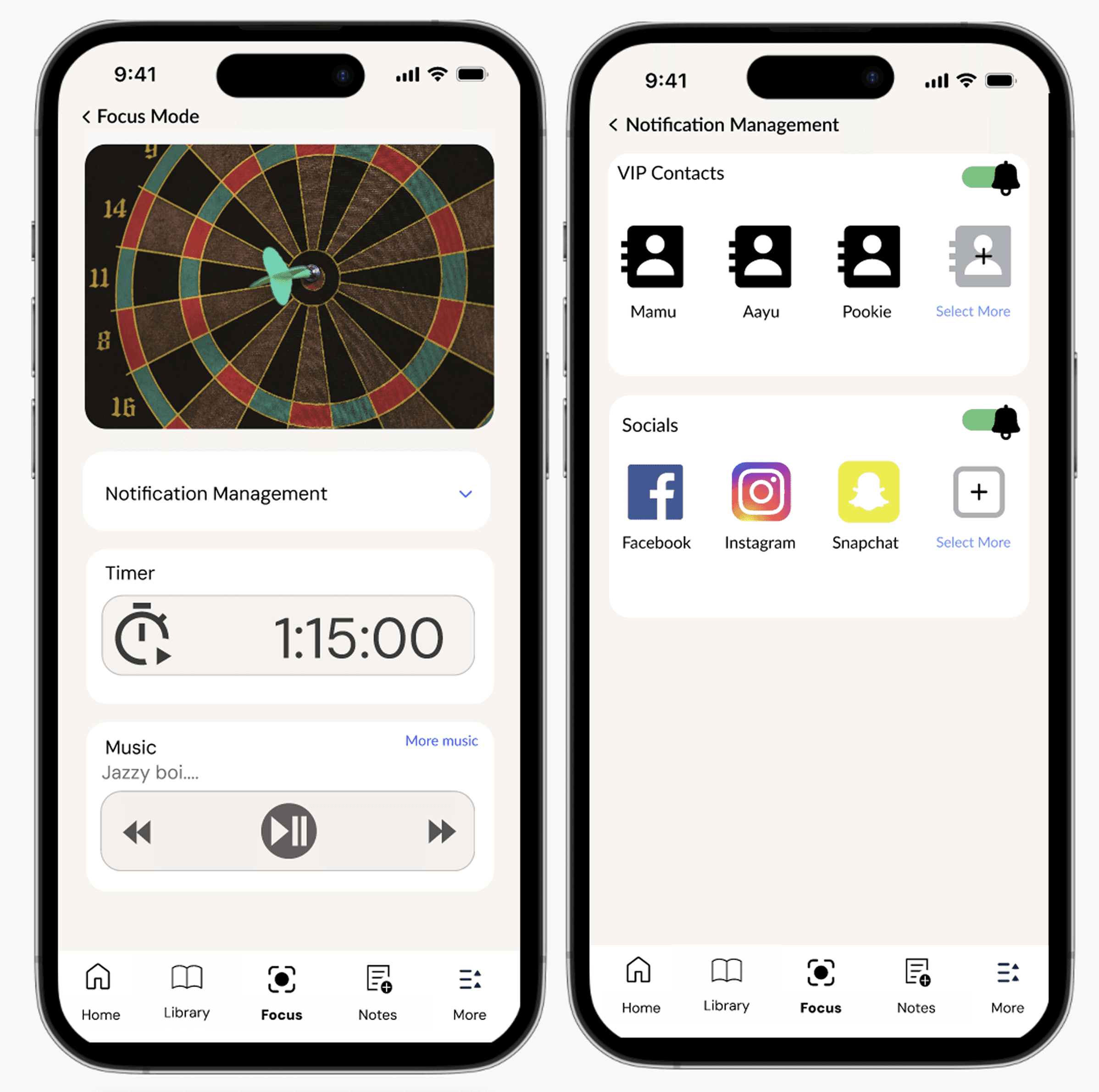
Focus Mode
BookNook’s Focus Mode helps readers stay immersed in their books by creating a calm, distraction-free digital space that supports mindful reading rather than isolation.
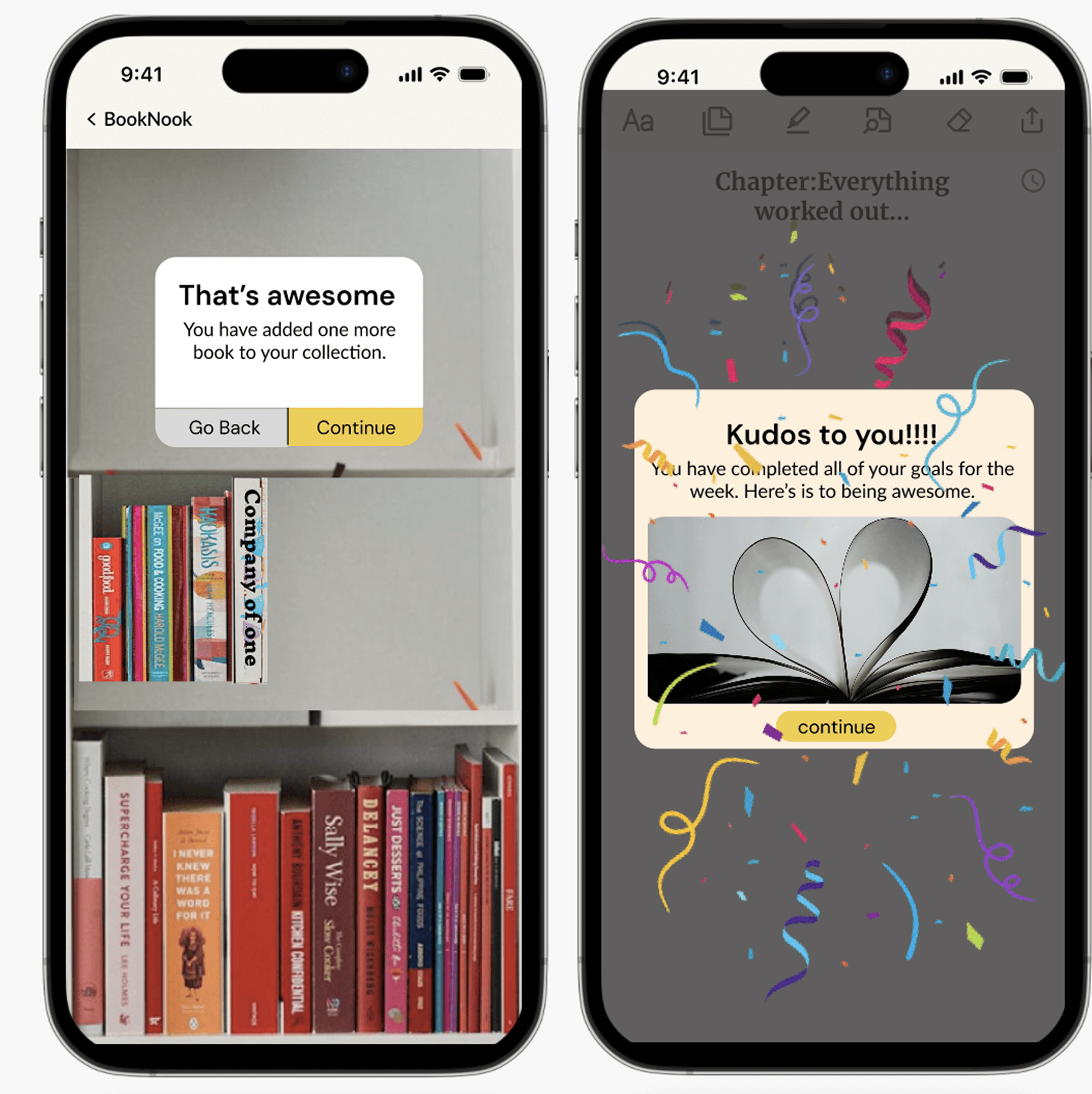
Gamified Progress
BookNook motivates readers through gentle gamification that celebrates progress instead of pressuring performance.
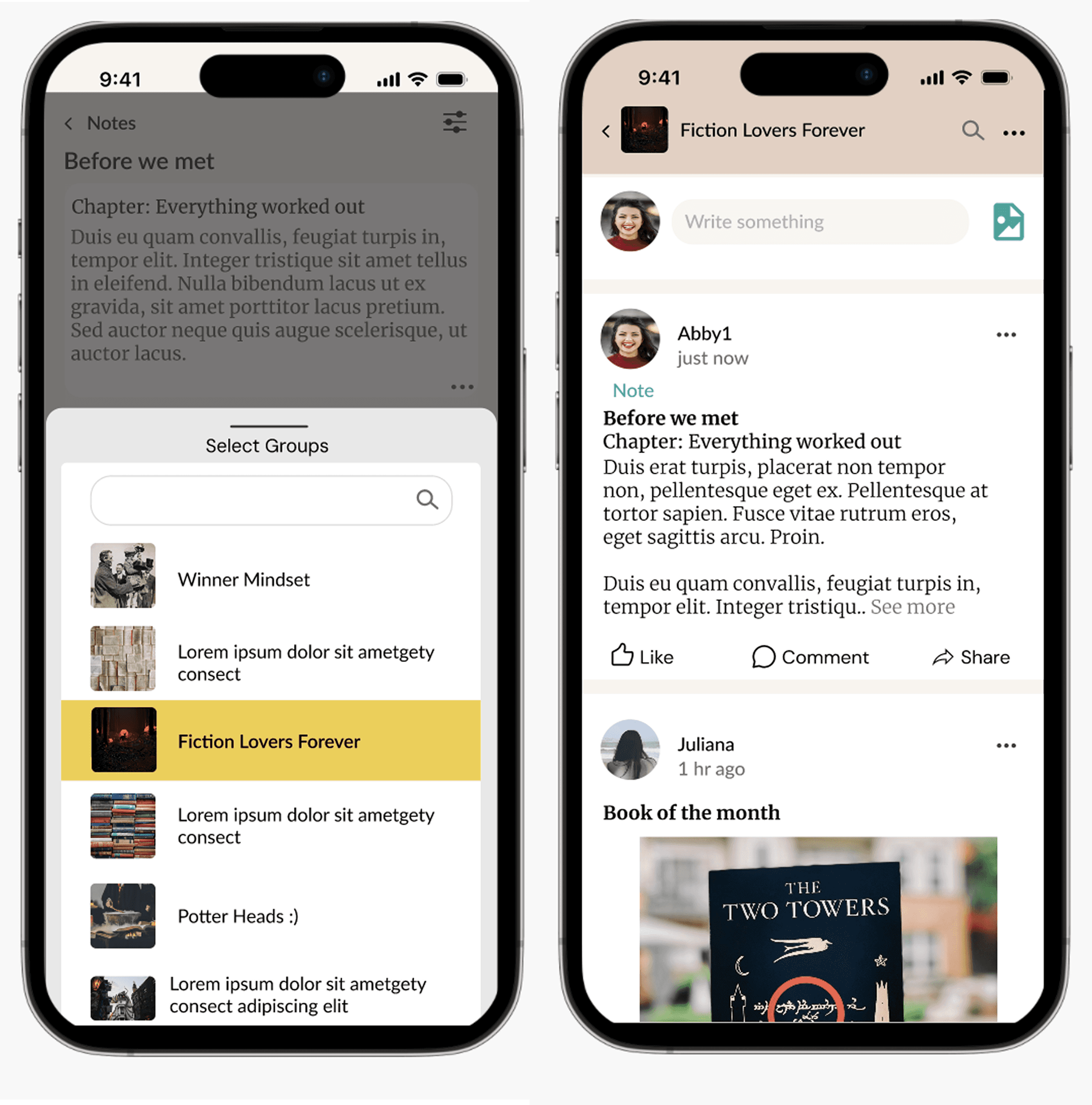
Social Reading and Sharing
To make reading more meaningful, BookNook introduces light social features that inspire connection and shared motivation.
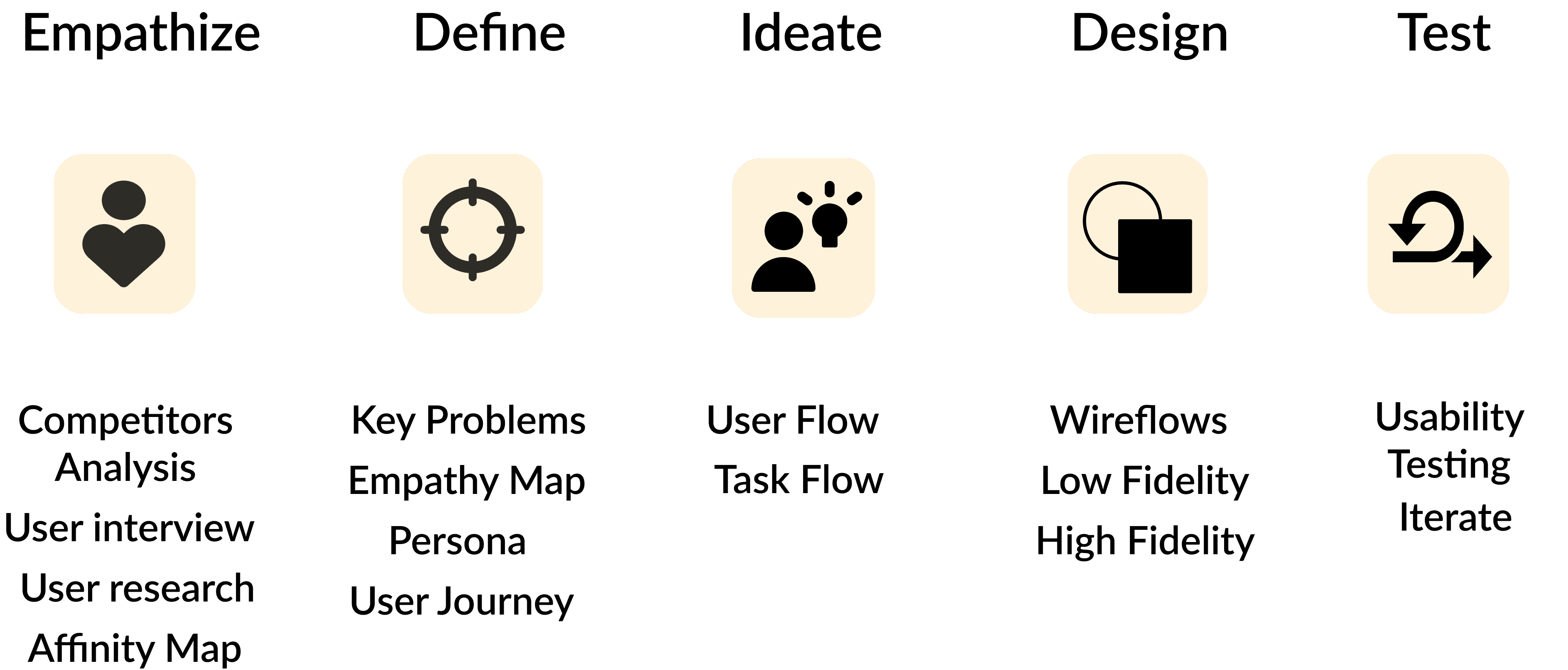
Design Process
Empathize
The goal of this phase was to understand, why readers want to read but often fail to start or finish. Through user interviews, observation of digital reading habits, and empathy mapping, this phase uncovered recurring struggles with distractions, fading motivation, and guilt. Insights revealed that readers need encouragement, focus, and joy to sustain their reading habits.
Competitors Analysis
Competitors lacked focus and emotional engagement

Most reading apps emphasize access and tracking rather than the reading experience itself.
Goodreads offers community and reviews but feels cluttered and visually overwhelming.
Blinkist focuses on summaries but lacks emotional connection and long-term engagement.
Libby provides easy access to library books but offers no motivation or focus tools.
Across platforms, users struggle to stay inspired, focused, and emotionally invested in their reading journey
User Interview
Interviewees expressed difficulty staying focused and motivated while reading
After conducting interviews with young adults aged 20–30 who enjoy reading but struggle to finish books, it became clear that distractions, fading motivation, and guilt were common barriers. Many described wanting to read more but lacking the tools or environment to stay consistent.
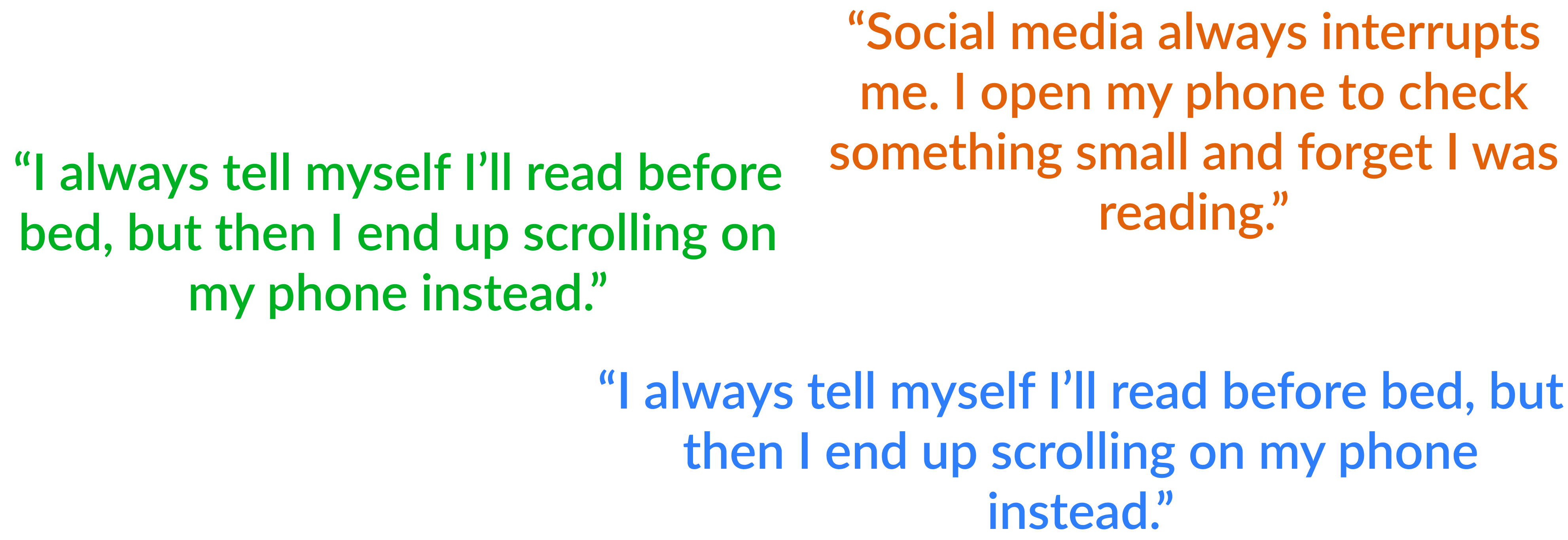
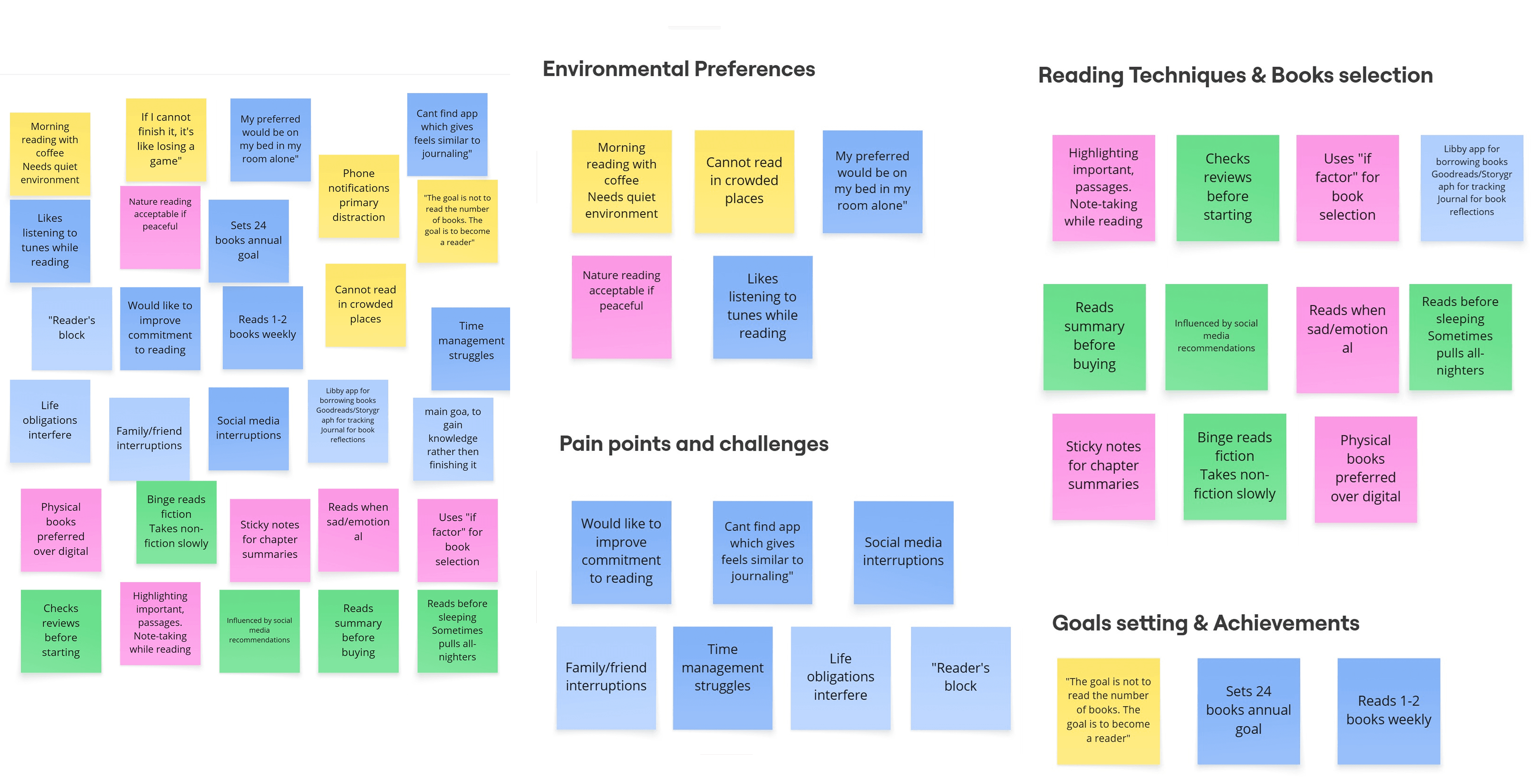
Insights from the interviews were recorded and organized into clusters to identify recurring patterns and themes reflecting readers’ shared challenges and motivations.
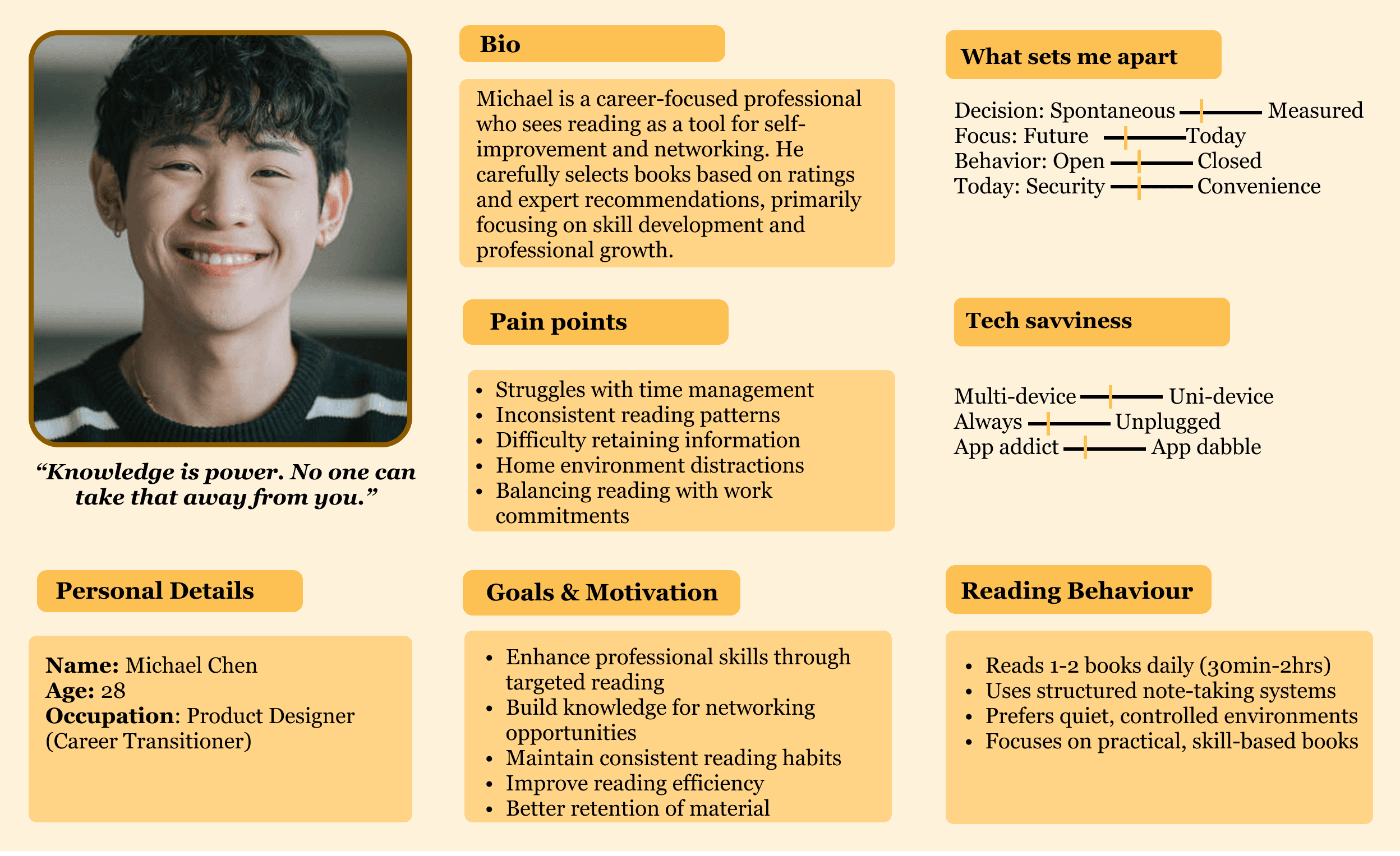
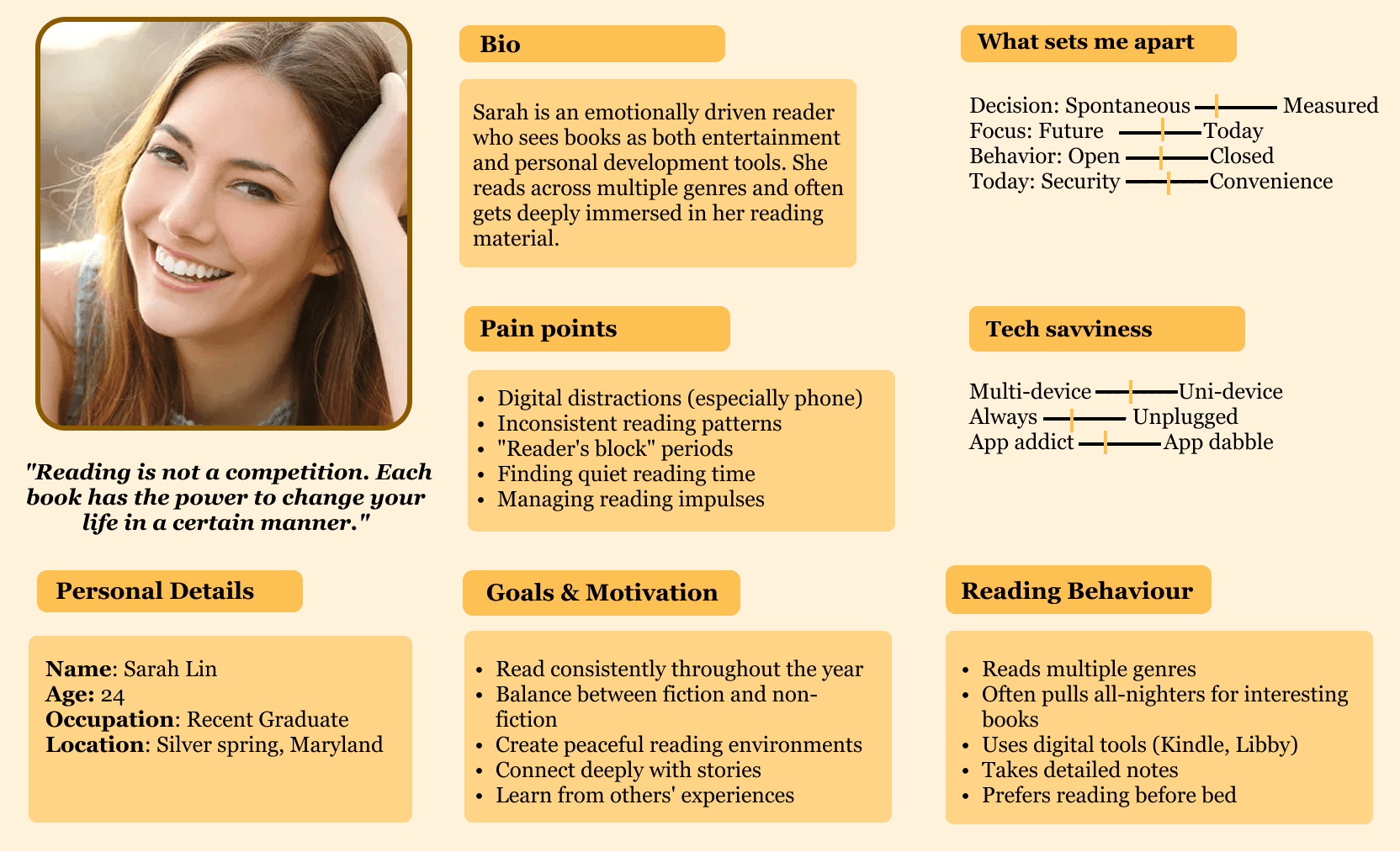
Persona
Ideate
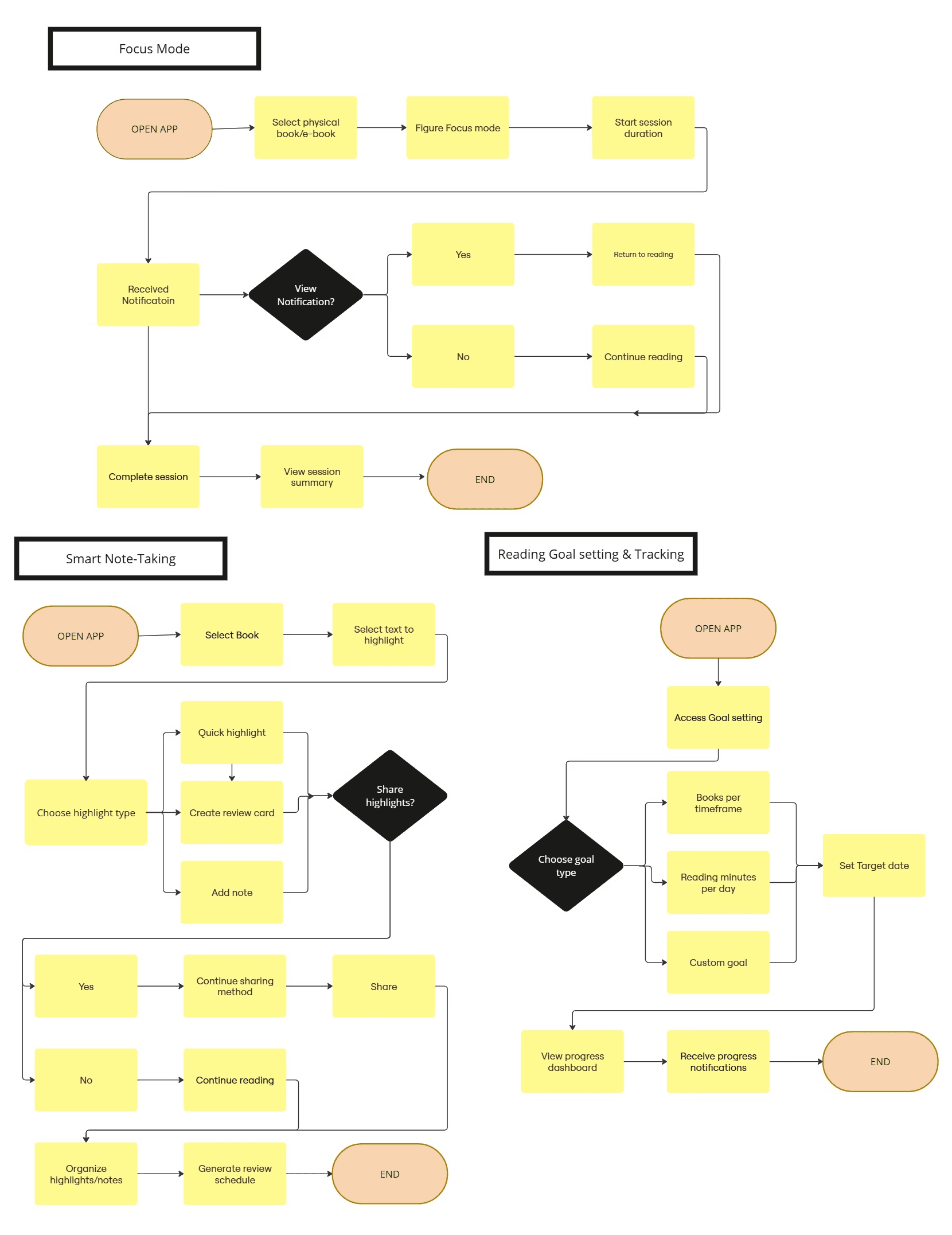
The goal here was to generate potential solutions to address user pain points. A competitive analysis of Goodreads, Blinkist, and Libby revealed gaps in motivation and focus features. Brainstorming and early user flows explored how onboarding, focus tools, and progress milestones could work together to create a more engaging and distraction-free reading experience.
User Flow
Design
The goal here was to translate ideas into tangible solutions. Wireflows and low-fidelity wireframes mapped key interactions, later evolving into high-fidelity prototypes with cozy branding and gentle gamification. The final design emphasized a seamless, inviting interface that balanced focus with motivation.
Sketch
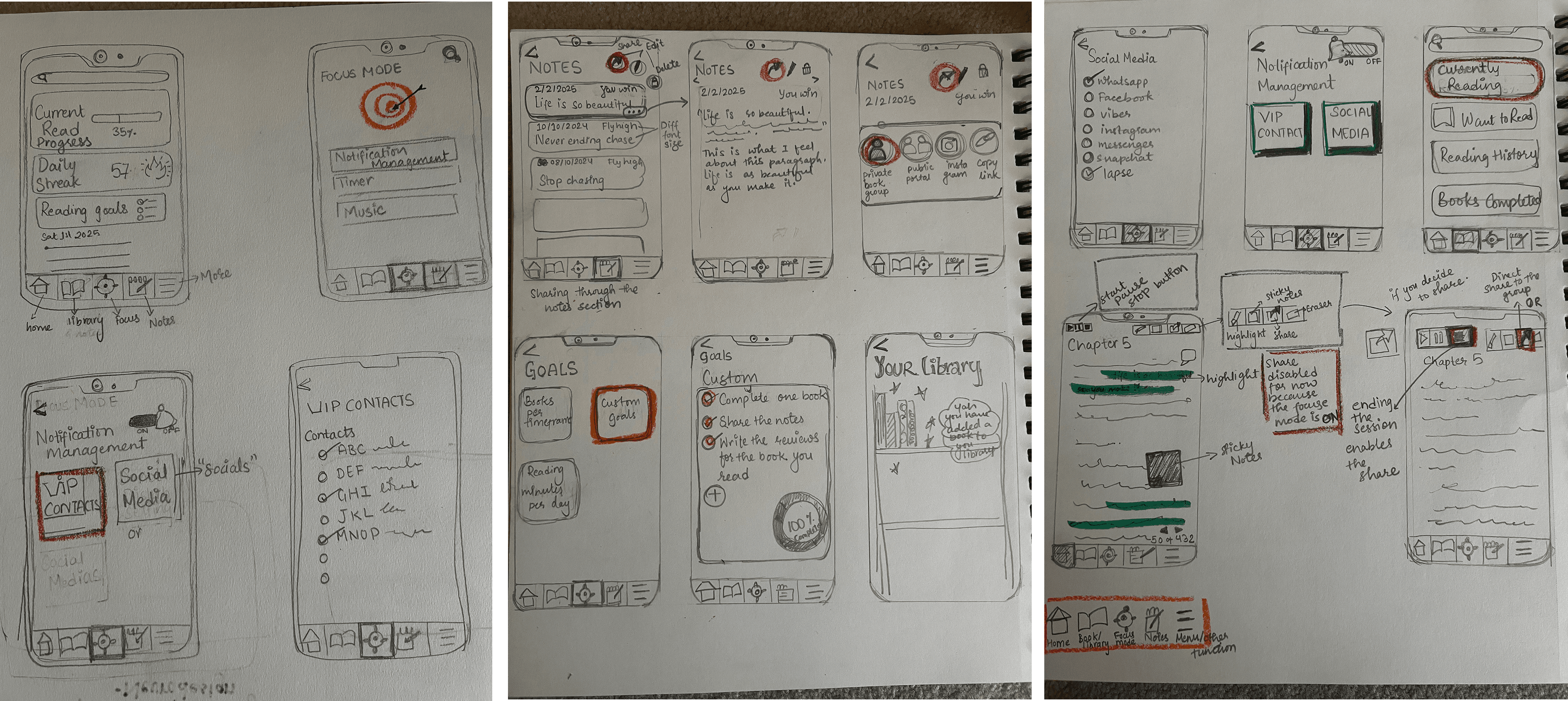
The design process began with hand-drawn sketches to quickly explore different layouts and flows for onboarding, Focus Mode, and progress tracking. These rough sketches helped visualize multiple directions without investing heavily in details, making it easier to compare ideas and narrow down promising approaches.
Wireflow
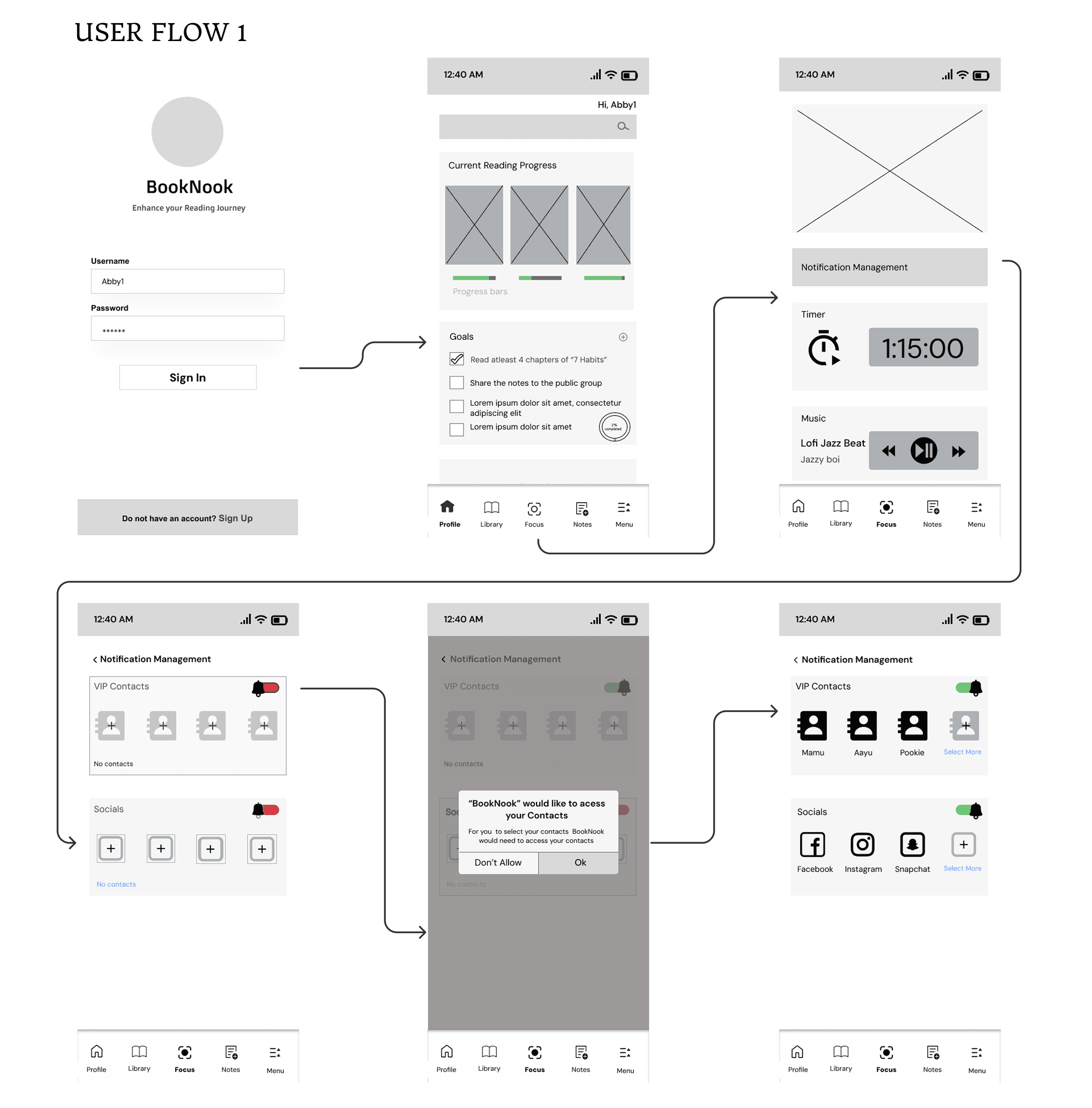
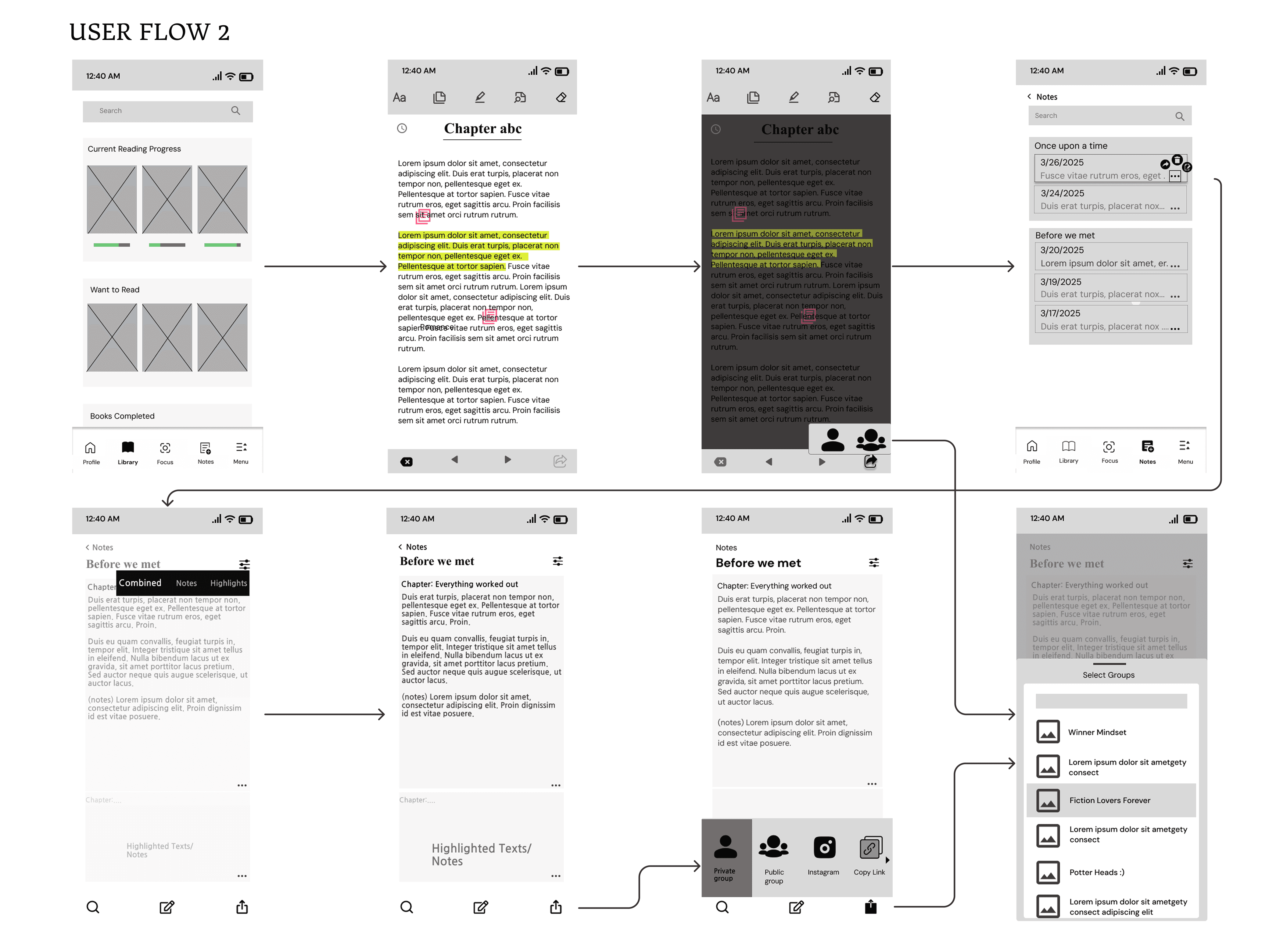
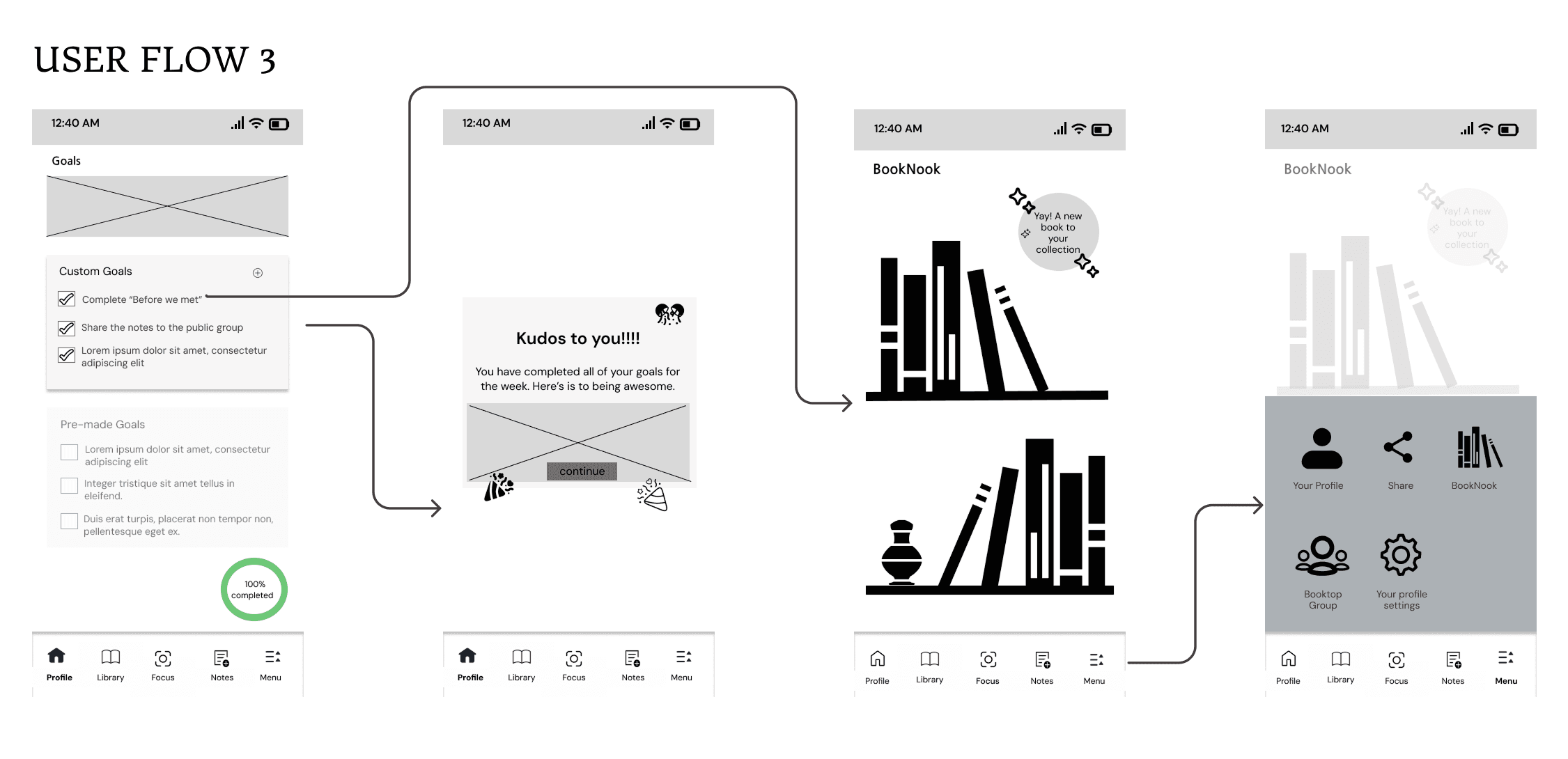
From there, low-fidelity wireflows were created to map how users would move through key tasks such as starting a book, entering Focus Mode, and completing a reading milestone. These wireflows clarified structure and functionality while keeping the focus on usability and interaction patterns rather than aesthetics.
Moodboard/Style guide
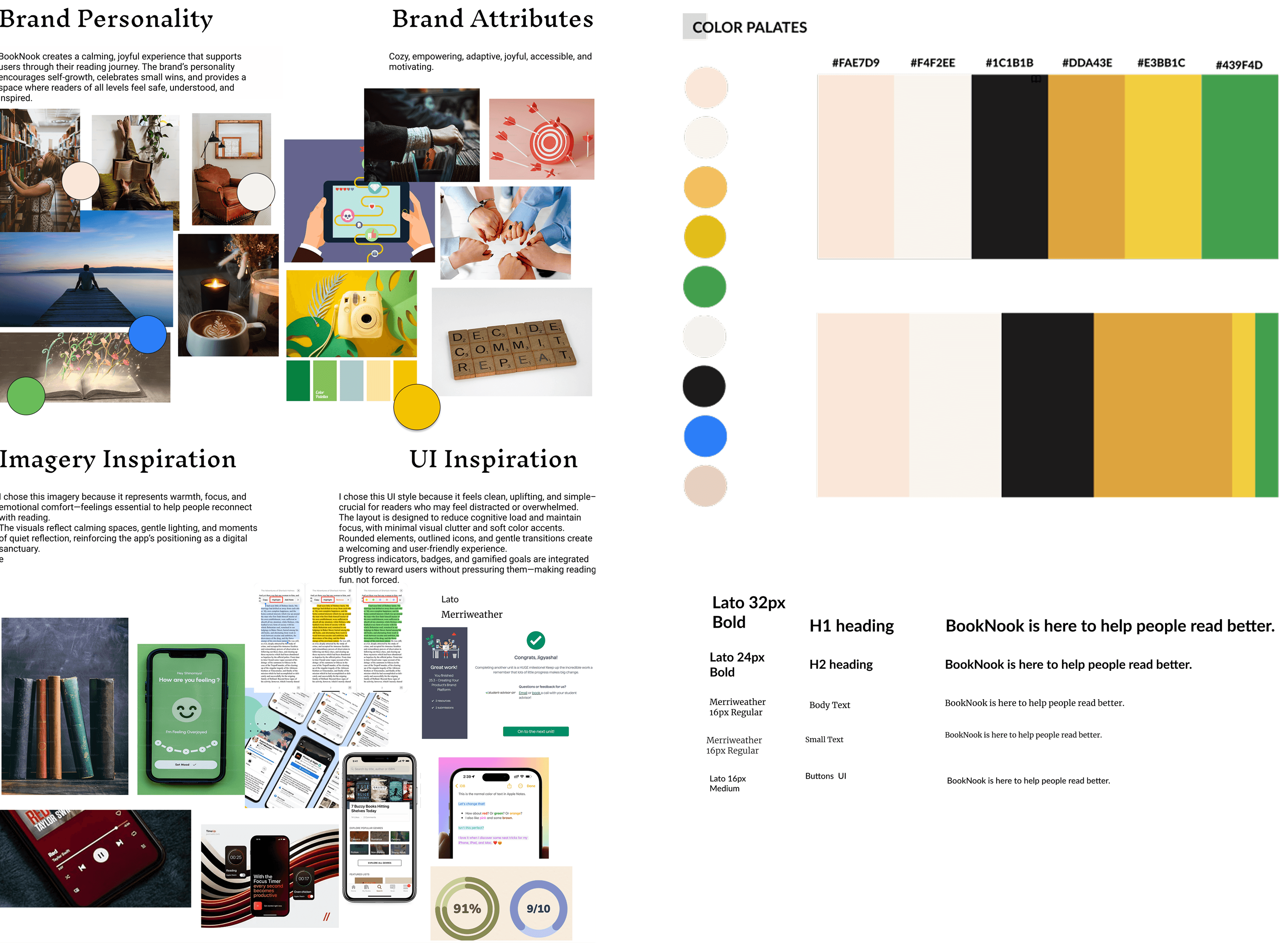
High Fidelity
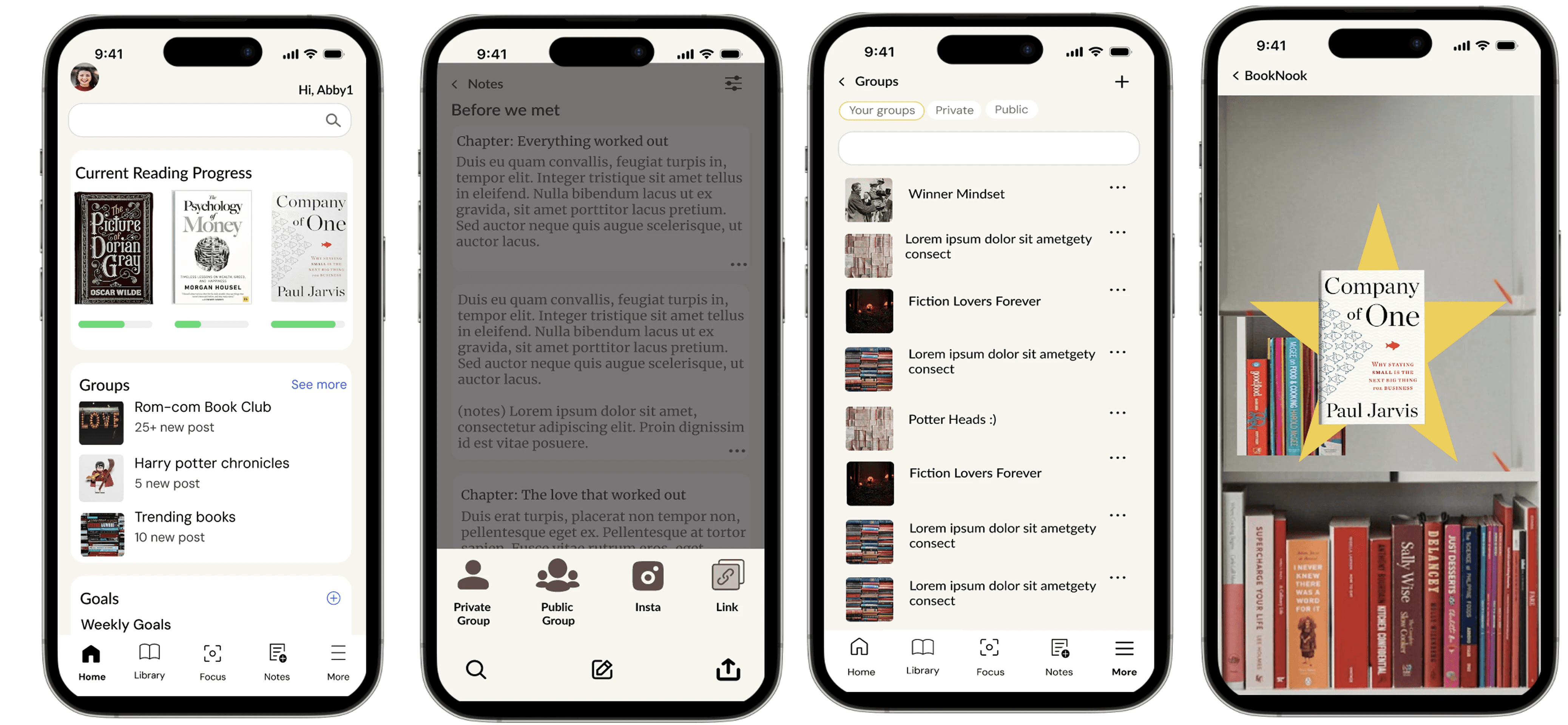
Once the flows felt solid, the design evolved into high-fidelity wireframes, incorporating BookNook’s cozy branding, gentle gamification elements, and polished UI details. The high-fidelity stage focused on typography, color, and micro-interactions that reinforced the app’s personality while maintaining clarity and accessibility.
Test
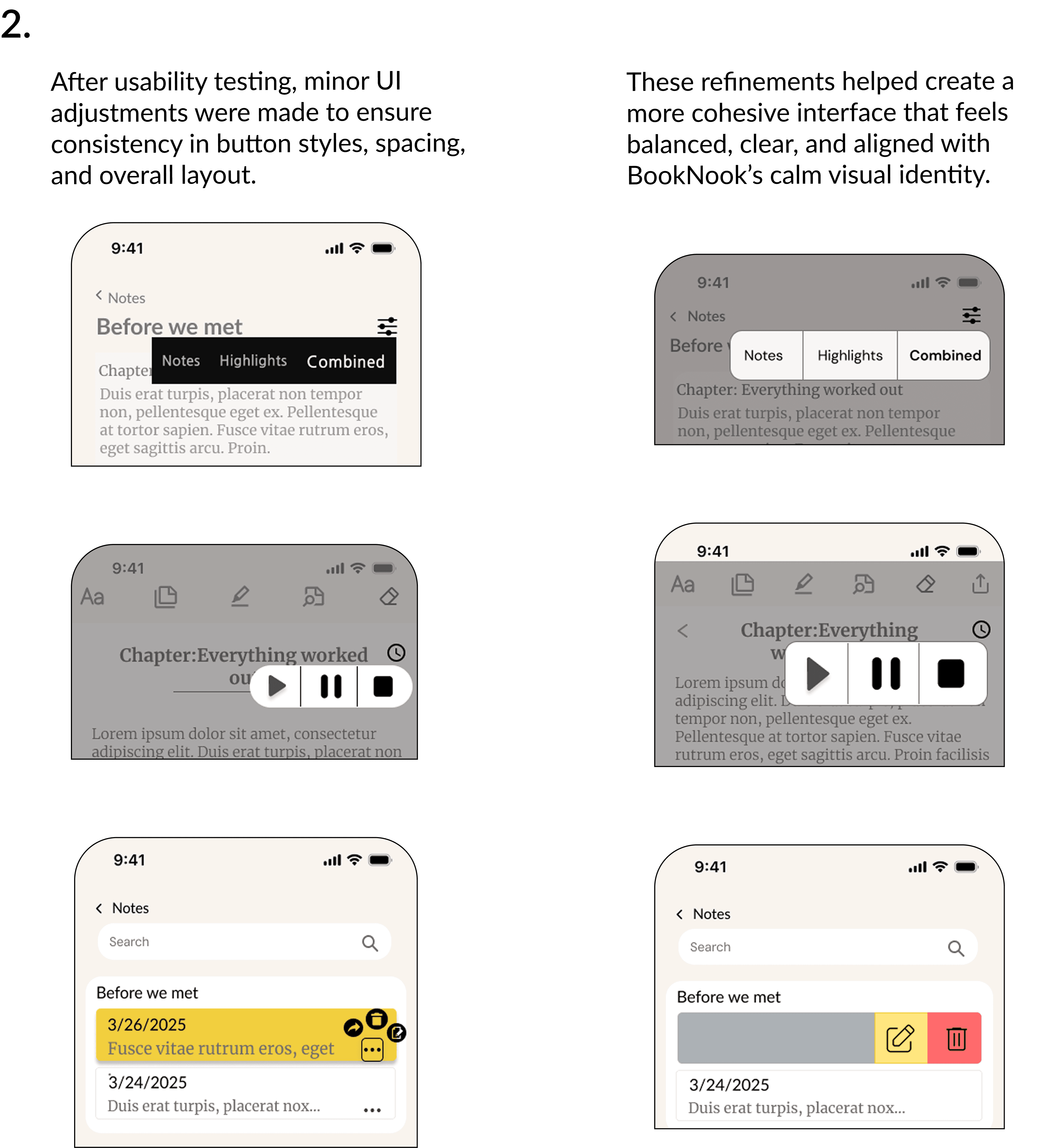
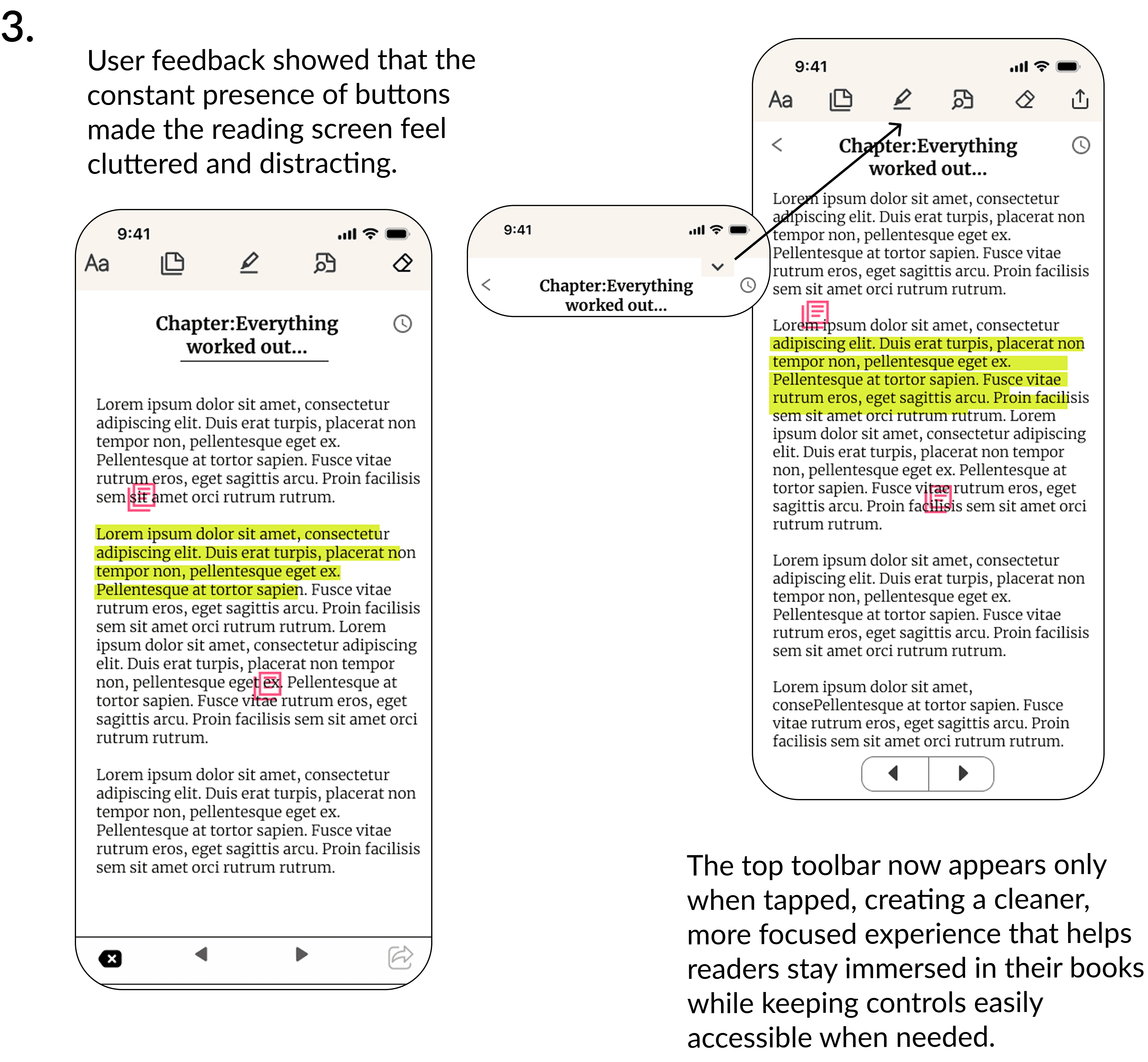
Main goal of this phase was to validate the design with real users and refine based on feedback. Two rounds of usability testing revealed issues with icon clarity and onboarding in the first round, which were resolved in the second. Results showed improved navigation, consistent UI, and positive reactions to features like Focus Mode and gamification.
Iterate
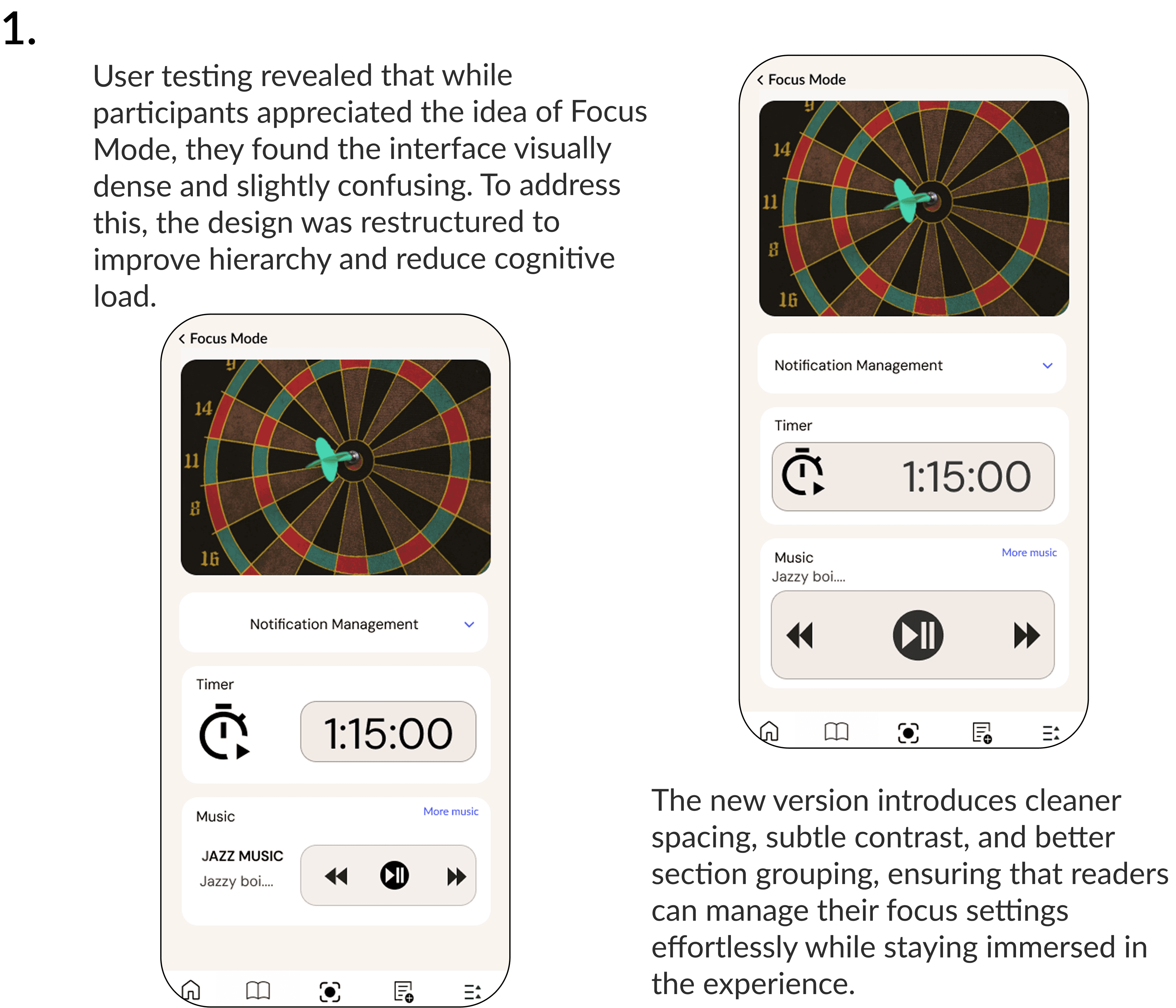
Feedback from usability testing inspired thoughtful design iterations that made BookNook feel more intuitive, focused, and aligned with the calm reading experience it aims to create.
Final Result
Reflection
Designing BookNook deepened my understanding of how human cognition and design psychology shape user experiences. Research on attention, motivation, and cognitive load directly influenced decisions like reducing visual clutter, adding Focus Mode, and using gentle gamification to sustain engagement. Through iterative testing, I learned how small design changes can meaningfully impact focus, emotion, and behavior. Moving forward, I aim to explore adaptive design strategies that respond to users’ cognitive states, creating experiences that feel intuitive, calm, and genuinely supportive of mindful reading.
Next Step
Simplify and standardize button styles and navigation placement for consistency.
Refine Focus Mode to better communicate its purpose and actions (e.g., timer behavior, ambient options).
Add subtle animations and feedback when users share notes or complete goals.
Test accessibility improvements, including color contrast and touch target sizes.
Conduct future A/B tests to explore how small interaction changes (like progress cues or sound feedback) affect motivation.
Overall, this round reinforced the importance of aligning design clarity with emotional engagement - helping readers stay focused, motivated, and at ease while using the app.